Thursday, November 15, 2018

Goa Lawah

goa lawah

candi goa lawah

ceremony goa lawah

Goa Lawah
Pura Goa Lawah is located in the village of Pesinggahan, Klungkung Regency, Bali.
The large complex of Pura Goa Lawah is located on the north side of Jalan Raya Goa Lawah main road, on the beach of Goa Lawah.
Pura Goa Lawah is sometimes included among the Sad Kahyangan Jagad, or the "six sanctuaries of the world", the six holiest places of worship on Bali.
According to Balinese beliefs, they are the pivotal points of the island and are meant to provide spiritual balance to Bali.
The number of these most sacred sanctuaries always adds up six, but depending on the region, the specific temples that are listed may vary
image milkseb

Chicken Cock In Brackets

Chicken Cock In Brackets
Roman Melnichuk
Indonesia, Bali

Tuesday, November 13, 2018

Majapahit

Shrine House Pura Majapahit Trowulan East Java
Shrines Pura Majapahit Trowulan East Java

Avalokitesvara Pura Majapahit Trowulan East Java
Shrine House Pura Majapahit Trowulan East Java
Full Res image
Shrines Pura Majapahit Trowulan East Java
Full Res Image
Avalokitesvara Pura Majapahit Trowulan East Java
Full Res Image
Image By Anandajoti Bhikkhu


Candi Belahan

Candi Belahan
Candi Belahan
Candi Belahan
Jeruk Purut village
Gempol sub-district
Pasuruan district

Petirtaan Belahan, better known as Candi Belahan, is a historic bath from the 11th century, during the period of the Airlangga kingdom. Petirtaan Belahan is located on the east side of Mount Penanggungan, precisely in the hamlet of Belahan Jowo, Wonosunyo, Gempol District. The bath is in the form of a rectangular pond that gets a supply of water from a small river. The rear west wall spreads the mountain slope with the form of niches that previously contained the embodiment of Airlangga's deity as Vishnu. With a length of 6.14 m and a width of 6.14 m
According to history, besides being the place for Prabu Airlangga's hermitage, this petirtaan is also functioned as a bathing for Prabu Airlangga's concubines. Therefore, as a form of dedication, 2 Empress Prabu Airlangga's statues were built, namely Dewi Laksmi and Dewi Sri. In the two statues, the flow of water flows from the shape of the bust of the statue, and therefore this petirtaan is sometimes referred to as the Source of the Drop (Tits: Payudara, Java)
In 991 AD, the King of Bali, Udayana made a temple to the west of Mount Pananggungan, Pasuruan, East Java. The name of the temple is Petirtaan Jolotundo, built to commemorate the birthday of his son, Airlangga. In 1009 AD, the adult Airlangga built a temple adjacent to the Jolotundo Petirtaan. Locals call it Candi Belahan, or Sumber Tetek Temple. Both statues symbolize fertility. That said, this pool is a bathing place for Prabu Airlangga's wives and concubines.
The nipple part of Dewi Laksmi's statue was repaired, because initially the water that came out just fell on her feet. It is feared that this could damage the statue's foot, so the temple administrator took the initiative to install a pipe in the chest so that the water immediately slid into the pond.

Thursday, July 26, 2018

Pura Besakih

pura besakih


Pura Besakih is a temple complex located in Besakih Village, Rendang District, Karangasem Regency, Bali, Indonesia. Komplek Pura Besakih consists of 1 Pura Pusat (Pura Penataran Agung Besakih) and 18 Pura Pengamping (1 Pura Basukian and 17 Pura Lain). In Pura Basukian, among them is a holy place given by God by Hyang Rsi Markendya, the forerunner of Hindu Dharma Religion now in Bali, as its center. Pura Besakih is the center of activity of all temples in Bali. Among all the temples belonging to the Pura Besakih complex, Pura Penataran Agung is the largest temple, the largest of its pelinggih buildings, the largest of its kind and the center and all the temples in Pura Besakih complex. In Pura Penataran Agung there are 3 statues or main temple symbol of the nature of God Tri Murti, namely God Brahma, Lord Vishnu and Lord Shiva who is the symbol of the Creator God, the God of Sustainer and the God of the Fuser / Reincarnation. Pura Besakih is on the UNESCO World Heritage Site proposals list since 1995.

Copyright Image Flickr
Meg Williams2009
Location
Ubud,Bali,Indonesia
Download Full-Res Image

Goa Gajah

The way the arch into Goa Gajah Temple


Goa Gajah
Goa Gajah And Ritual


swimming baths

water fountain
The way the arch into Goa Gajah Temple

Although the origin of this cave is uncertain, it is believed to have been built as a place for spiritual meditation. One folktale tells that it was created by the legendary giant nails of Kebo Iwa. However, examining his style, the sanctuary probably dates from the 11th century of the Kingdom of Bali. The complex contains Hindu and Buddhist imagery, because the cave contains lingam and yoni, Shiva symbols, and Ganesha images, while on the banks of the river there are carvings of stupas and chattra images, images of Buddhism.
The cave was rediscovered by Dutch archaeologists in 1923, but fountains and bathing pools were not found until 1954.

Copyright Image Flickr
Meg Williams2009
Location
Ubud,Bali,Indonesia


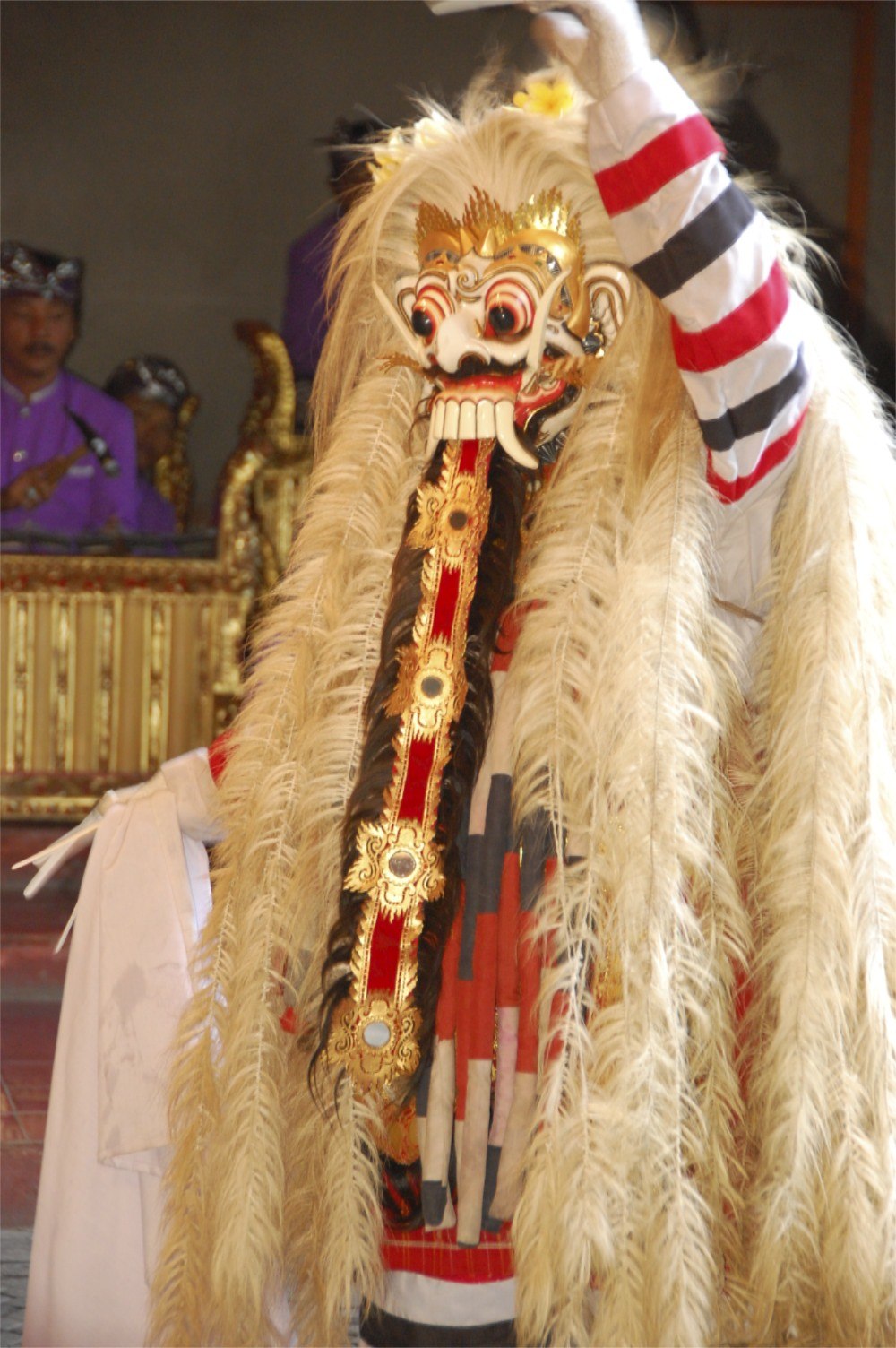
Rangda

Rangda
Statue Rangda
Dance rangda
Rangda is the queen of leaks in Balinese mythology. This frightening creature is told to often kidnap and eat small children and lead the evil witch forces against the Barong, which is a symbol of good strength
The further development of Rangda's term for widows is increasingly rarely heard, because it is feared to give the impression of uncomfortable considering Rangda's form of 'aeng' (spooky) and scary and identical with people who have knowledge of the left (pengiwa). This is especially true in folklore shows. In other words, there is the impression of fear, offense and embarrassment when it is said to be able to sigh neranguh (ngeleak). Indeed the above understanding is more inspired by the folk tales in which there are elements of Rangda.
The story that has the most influence is Calonarang.

Copyright Image Flickr
Meg Williams2009
Location
Ubud,Bali,Indonesia
Download Full-Res Image 

Puri Agung Peliatan

Puri Agung Peliatan


Puri Agung Peliatan
History Peliatan CastlePuri Agung Peliatan is one of the old castles in Bali that stood since the 17th century.
According to some chapters and research of foreign nations, Ubud in the XVII century still consists of rice fields and shrubs, and forest. A small part already inhabited by a population consisting of Kuwu-kuwu (the Cabin), they inhabit the territories, Jungut, Taman and Bantuyung. Still a territory of the kingdom of Sukawati which stood around 1710, with its first king named Sri Aji Maha Sirikan, Sri Aji Wijaya Tanu.
With the success of the formation of the reigning authority in Sukawati, the court's followers were then sent in the late 1700s to secure the area of ​​Ubud. A pair of cousins ​​form a rival community in Padang Tegal and further north in the Park area. After the ensuing battle between the neighboring villages of King Sukawati sends his brothers Tjokorde Ngurah Tabanan to Peliatan and Tjeban Tangkeban for Sambahan to build the palace with the idea of ​​controlling the troubled areas.
Despite the initial feudal struggle between the Peliatan and Mengwi kingdoms, the two overcame their differences after the battle that was said to have involved magical powers. After that, people from Mengwi were moved to help fill Ubud and during the late 1800s the whole region began to flourish with abundant supply of rice and a booming economy.
you can know the history of the kingdom in the peliatan and every Saturday & Sunday usually there is a typical dance peliatan.

Copyright Image Flickr
Meg Williams2009
Location
Ubud,Bali,Indonesia
Download Full-Res Image

Candi Belahan

Candi Belahan/Candi Tetek


candi Belahan pict 2

Candi Belahan pict 3

Candi Belahan pict 4
     Petirtaan Hemisphere, better known as the Hemisphere Temple is a historic bath of the 11th century, during the Airlangga Kingdom. Petirtaan Belahan is located on the east side of Mount Penanggungan, precisely in Dusun Belahan Jowo, Wonosunyo, Gempol Sub-district.
The bath is a rectangular pond that gets water from a small stream.
The rear west wall encircling the slopes of the mountain with the shape of niches that formerly contained the statue of Airlangga's manifestation as the god Vishnu. With a length of 6.14 m and width of 6.14 m
     Historically, aside from being the hermitage of King Airlangga, this petirtaan also functioned as a bath of the concubines of King Airlangga. Therefore, as a form of devotion built 2 statues of King Airlangga prais, Dewi Laksmi and Dewi Sri.
On these two statues, flowing water flow from the shape of the breast of the statue, and therefore this petirtaan sometimes referred to as Source Tetek (Tetek: Breast, Java)
     In 991 AD, the King of Bali Udayana made a temple in the west of Mount Pananggungan, Pasuruan, East Java.
The name of the temple is Petirtaan Jolotundo, built to commemorate the birth of his son Airlangga.
In 1009 AD, an adult Airlangga built a temple adjacent to the Petirtaan Jolotundo. Locals call it Temple Hemisphere, or Temple Source Tetek.
Both statues symbolize fertility. It is said that this pool is the bath of the wives and concubines of King Airlangga. The nipple statue of Goddess Lakshmi was repaired, because initially the water that came out just fell on his feet.
It is feared this could damage the legs of the statue, then the temple manager took the initiative to install a pipe in the chest so that the water immediately slid into the pond.

Copyright Image Flickr
Anandajoti Bhikkhu
Location
wonosunyo,gempol,Indonesia
Download Full-Res Image 1
Download Full-Res Image 2
Download Full-Res Image 3
Download Full-Res Image 4


Candi Jawi

Candi Jawi
Candi Jawi '08
Jawi Temple
(original name: Jajawa) is a temple built around the 13th century and is a historic relic of Hindu-Buddhist Kingdom Singhasari located at the foot of Mount Welirang, precisely in the Village Temple Wates, Prigen District, Pasuruan, East Java, Indonesia , about 31 kilometers from the city of Pasuruan. This temple is located midway between Pandaan sub-district Prigen and Pringebukan. Jawi temple is widely thought of as a place of worship or a place of Buddhist worship, but is actually a place of sabharmaan or storage of ash from the last king of Singhasari, Kertanegara. Some of the ash is also stored on Singhasari Temple. Both of these temples have something to do with Candi Jago which is a place of King Kertanegara worship.

Copyright Image Flickr
Rifky Primadhany
Location
prigen,pasuruan,Indonesia
Download Full-Res Image

Candi Arjuna

Candi Arjuna
Arjuna Temple is one of the temple buildings in Arjuna Encamp Complex, Dieng. In this complex there is also Semar Temple, Srikandi Temple, Puntadewa Temple, and Sembadra Temple. Arjuna temple is located north of the row of enshrinements in the complex. Meanwhile, Semar Temple is an ancillary temple or a complement of Arjuna Temple. Both buildings are facing each other.
Like most temples in Dieng, the community gave the name of Mahabarata puppet character as the name of the temple.

Copyright Image Flickr
yunanithebest
Location
ungaran,semarang,Indonesia
Download Full-Res Image 

Candi Gedong Songo

Candi Gedong Songo
    Gedong Songo Temple is the name of a Hindu temple cultural building complex located in the village of Candi, Bandungan District, Semarang regency, Central Java, Indonesia precisely on the slopes of Mount Ungaran. In this temple complex there are nine temples.
This temple was discovered by Raffles in 1804 and is a relic of Hindu culture from the 9th century Syailendra Shadow (year 927 AD).

     This temple has similarities with Dieng temple complex in Wonosobo. The temple is located at an altitude of about 1,200 m above sea level so that the air temperature here is quite cold (ranging from 19-27 ° C)
Location 9 temples scattered on the slopes of Mount Ungaran has beautiful natural scenery. In addition, this tourist attraction is also equipped with hot springs from a spring containing sulfur, camping areas, and equestrian tours.

Copyright Image Flickr
yunanithebest
Location
ungaran,semarang,Indonesia
Download Full-Res Image 

Candi Ijo

Candi Ijo


Ijo Temple is a Hindu-style temple complex, located 4 kilometers southeast of Candi Ratu Boko or about 18 kilometers east of Yogyakarta. This temple is estimated to be built between the period of the 10th century until the 11th AD at the time of Medang period Mataram period

Copyright Image Flickr
Eko Wahyu Pribadi
Location
Yogyakarta,Indonesia
Download Full-Res Image

Gapura Bajang Ratu

Gapura Bajang Ratu
Gapura Bajang Ratu or also known as Bajang Ratu Temple is a gate of Majapahit temple located in Temon Village, Trowulan Subdistrict, Mojokerto Regency, East Java, Indonesia.

Copyright Image Flickr
mikocok
Location
Mojokerto,Java,Indonesia
Download Full-Res Image

Lake Kelimutu

Lake Kelimutu
Lake Kelimutu
Mount Kelimutu is a volcano located in Flores Island, NTT Province, Indonesia. The location of this mountain precisely in the Village Pemo, District Kelimutu, Ende District. This mountain has three crater lakes at its peak. The lake is known as the Three Color Lake because it has three different colors, namely red, blue, and white. However, the colors are always changing over time.
Flores is a combination of words from "keli" which means mountain and the word "quality" which means to boil. According to the beliefs of the locals, the colors on the lake of Kelimutu have their own meaning and have a very powerful natural power.
Lake or Tiwu Flores is divided into three parts corresponding to the colors in the lake. The blue lake or "Tiwu Nuwa Muri Koo Fai" is a gathering place for the souls of young people who have died. The red lake or "Tiwu Ata Polo" is a gathering place for the souls of the deceased and as long as he lives always commits crime / divination. While the lake is white or "Tiwu Ata Mbupu" is a gathering place for the souls of parents who have died.
The residents around Lake Kelimutu believe, that when the lake changes color, they must give offerings to the spirits of the dead.
The third area of ​​the lake is about 1,051,000 square meters with a water volume of 1,292 million cubic meters. The boundary between the lakes is a narrow stone wall that easily landslides. This wall is very steep with a 70 degree angle. The height of the lake wall ranges from 50 to 150 meters.

Copyright Image Flickr
Thibaud Chanfray
Location
Flores Island,Indonesia
Download Full-Res Image 

Wednesday, July 25, 2018

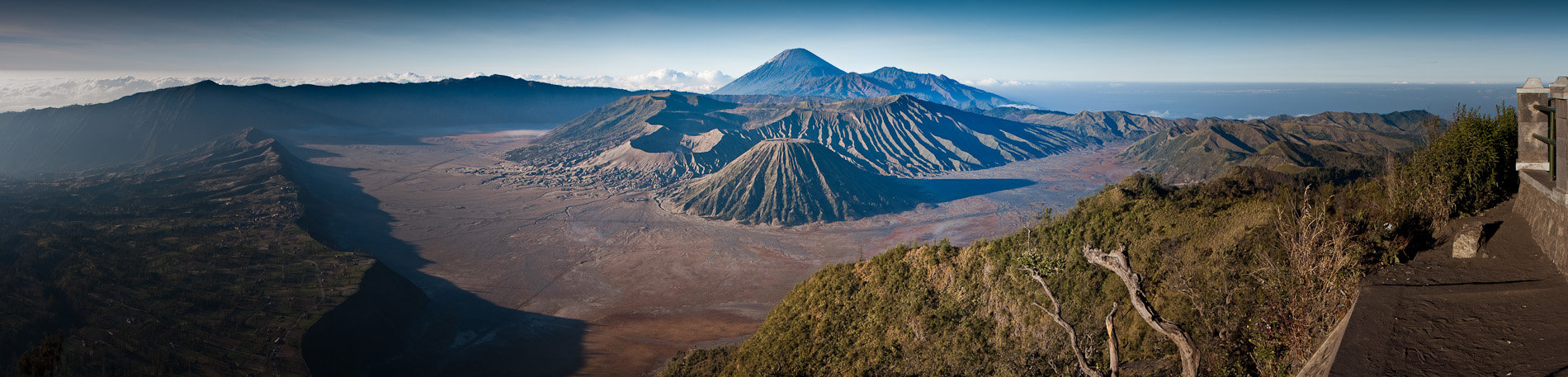
Mountain Bromo

Mountain Bromo

Mountain Bromo


Mount Bromo (from Sanskrit: Brahma, one of the Main Gods in Hinduism) or in Tengger spelled "Brama", is an active volcano in East Java, Indonesia. This mountain has a height of 2399 meters above sea level and is in four districts, namely Probolinggo, Pasuruan, Lumajang, and Malang. Mount Bromo is famous as a major tourist attraction in East Java. As a tourist attraction, Bromo becomes attractive because of its status as an active volcano. Mount Bromo is included in the area of ​​Bromo Tengger Semeru National Park.
The body shape of Mount Bromo is linked between the valley and the canyon with the caldera or the sea of ​​sand covering about 10 square kilometers.
Mount Bromo has a crater with a diameter of ± 800 meters (north-south) and ± 600 meters (east-west). While the danger area in the form of a circle with radius 4 km from the center of the crater of Bromo
 
Copyright Image Flickr
Max.grassi
Location
java,Indonesia
Download Full-Res Image 1
Download Full-Res Image 2
Download Full-Res Image 4

Candi Prambanan

Candi Prambanan 1
Candi Prambanan 2
Splendid night view

     Prambanan Temple or Roro Jonggrang Temple is the largest Hindu temple complex in Indonesia built in the 9th century AD. This temple is dedicated to Trimurti, the three major Hindu gods of Brahma as the creator god, Vishnu as the nurturing deity, and Shiva as the god of destruction. Based on the inscription of Siwagrha the original name of this temple complex is Siwagrha (Sanskrit meaning 'House of Shiva'), and indeed in garbagriha (main room) this temple resides in the statue of Shiva Mahadewa as high as three meters indicating that in this temple Shiva god takes precedence.
The temple complex is located in Prambanan, Sleman and Prambanan sub-districts, Klaten, approximately 17 kilometers north-east of Yogyakarta, 50 kilometers southwest of Surakarta and 120 kilometers south of Semarang, just on the border between Central Java and Yogyakarta Special Provinces. very unique, Prambanan Temple is located in the administrative area of ​​Bokoharjo village, Prambanan, Sleman, while the entrance of the Prambanan Temple complex is located in the administrative area of ​​Tlogo village, Prambanan, Klaten.
     This temple is including UNESCO World Heritage Site, the largest Hindu temple in Indonesia, as well as one of the most beautiful temples in Southeast Asia. The architecture of this building is tall and slender in accordance with the Hindu architecture in general with the Shiva temple as the main temple has a height reaching 47 meters towering in the center of the complex of smaller temple clusters.As one of the grandest temples in Southeast Asia, Prambanan temple became an attraction tourist visits from all over the world.
According to the inscription of Siwagrha, this temple began to be built around the year 850 AD by Rakai Pikatan, and continues to be developed and expanded by Balitung Maha Sambu, during the Medang Mataram empire.

Copyright Image Flickr
Max.grassi
Location
cental java,Indonesia
Download Full-Res Image 1
Download Full-Res Image 2

Copyright Image Flickr
wuryantoro soeharto
Location
Yogyakarta,Indonesia
Download Full-Res Image


Candi Pawon

candi pawon

The name of Pawon Temple can not be known for certain its origin. J.G. epigraphy expert de Casparis interprets that Pawon is derived from the Java language awu which means 'ash', gets the prefix of the pa- and the suffix -an which denotes a place. In everyday Java the word pawon means 'kitchen', but de Casparis defines it as a 'furnace' or a place of ash. Locals also mention the Pawon Temple under the name Bajranalan. This word may be derived from the Sanskrit word vajra = meaning 'lightning' and anala which means 'fire'. Pawon Temple was restored in 1903.

Copyright Image Flickr
Max.grassi
Location
cental java,Indonesia
Download Full-Res Image

Candi Sewu

candi sewu
candi sewu

Sewu Temple or Manjusrighra is a Buddhist temple built in the 8th century just eight hundred meters to the north of Prambanan Temple. Sewu Temple is the second largest Buddhist temple complex after Borobudur Temple in Central Java. Sewu temple is older than Borobudur and Prambanan Temple. Although the original has 249 temples, by the local community this temple is called "Sewu" which means one thousand in Javanese. This naming is based on the legend of Loro Jonggrang.

Copyright Image Flickr
Meg Williams2009
Location
Tlogo,Yogyakarta,Indonesia
Download Full-Res Image

goa lawah candi goa lawah ceremony goa lawah Goa Lawah Pura Goa Lawah is located in the village of Pesinggahan, Klungkung...